Content strategy consultant
SEO content strategy for search intent, topical authority, and organic growth
I help companies build content strategies that improve discoverability, align with user intent, and support long-term organic growth. As a content strategy consultant and SEO content consultant, my work combines keyword research, keyword clustering, search intent mapping, content architecture SEO, audience understanding, and practical planning across SaaS, ecommerce, and large-scale content environments.
Hands-on experience across content architecture, keyword strategy, search intent mapping, topic clusters SEO, and scalable SEO planning for SaaS and ecommerce.
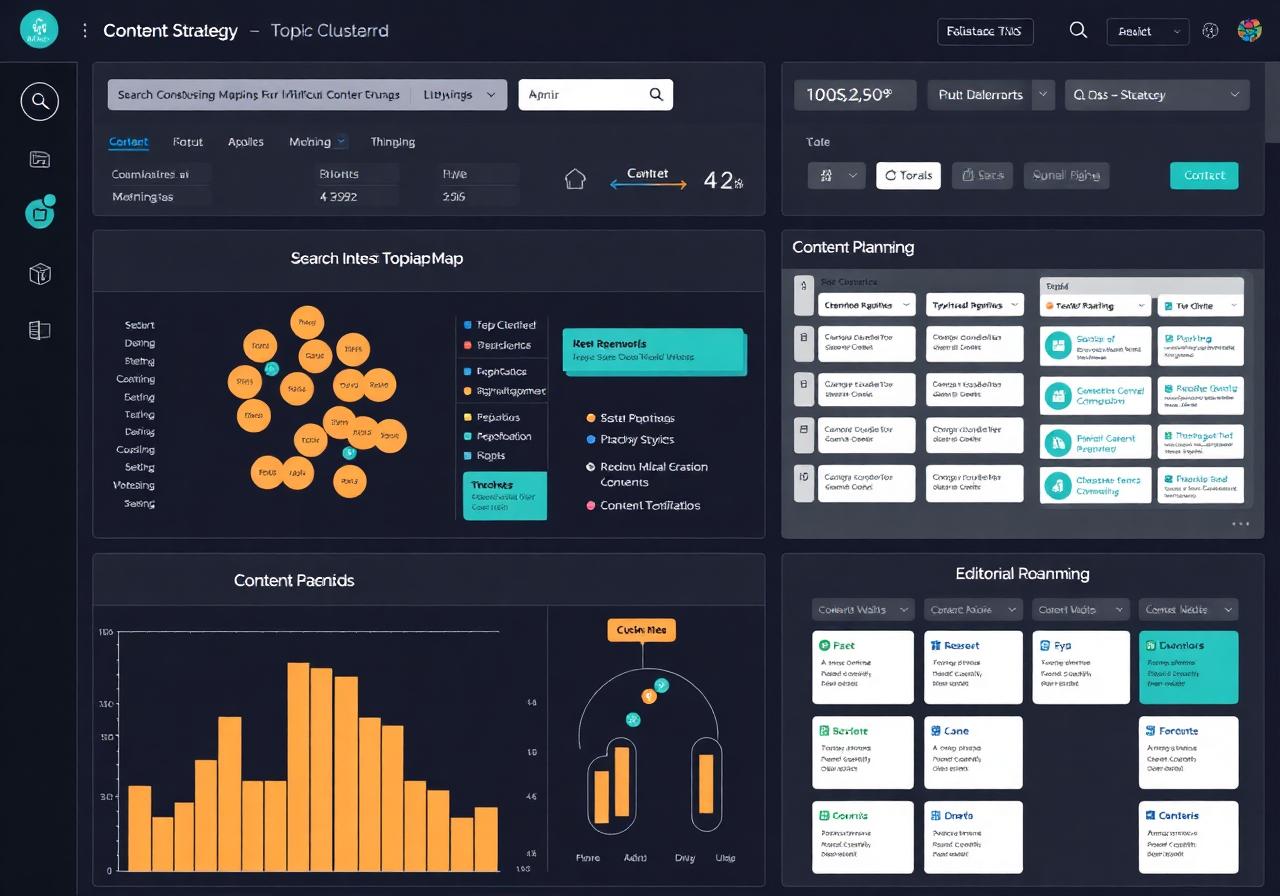
Content strategy that starts with search behavior, not guesses
Strong SEO content strategy begins with understanding what people actually search for, why they search for it, and what kind of content is most useful at that moment.
My approach connects audience research, keyword opportunity, search intent mapping, topical structure, and page planning. That means identifying the themes worth owning, organizing them into meaningful topic clusters, and creating a content roadmap SEO teams can actually use to support discoverability and business goals.
Across past work, that has included customer-persona research, competitor benchmarking, competitor gap analysis SEO, intent-based keyword mapping, long-tail and conversational keyword discovery, cluster planning, and content performance monitoring. In one strategy plan, the work included identifying 500 new high-intent keywords, mapping them into 15–20 thematic clusters, prioritizing 5–7 high-intent clusters, and planning 20 page optimizations plus 10 new pages.
What SEO content strategy support includes
Where a project starts depends on what your content is missing.
Keyword research and opportunity discovery
I identify keyword themes, content gaps, and search opportunities worth pursuing — including high-intent keywords, long-tail opportunities, competitor gaps, and topics aligned with commercial value.
Find content opportunities →Search intent and buyer-journey mapping
I map keywords and topics to the user journey so content is aligned to what people need at different stages of awareness and decision-making, connecting keywords to page type, expectations, and conversion potential.
Map search intent →Topic clusters and content architecture
I organize keywords into clear topic clusters so content can be planned more strategically. This supports topical authority, internal linking, page prioritization, and scalable coverage across key themes.
Build topic clusters →Audience-led content planning
I build content plans around real audience needs using customer-persona analysis, review mining, query analysis, and competitor benchmarking to understand what people care about and what the market is missing.
Plan audience-led content →Content briefs and optimization planning
I turn strategy into practical execution through content planning, page recommendations, optimization priorities, and on-page guidance around titles, headings, internal links, and content structure.
Create a content roadmap →Content performance monitoring
I help teams measure how content performs through tracking visibility, clicks, impressions, rankings, CTR, engagement, conversions, and content decay so strategy can improve over time.
Measure content performance →AI-assisted content workflows built with human judgment
I use AI to improve workflow quality and speed, but not as a replacement for strategy, editorial judgment, or subject understanding.
AI for research, clustering, and content planning
In the right workflow, AI can help accelerate keyword discovery, query expansion, clustering, SERP pattern analysis, and content planning. Tools like Jasper and AirOps can be useful for scaling research, drafting structured inputs, accelerating topic development, and supporting repeatable content operations. The value comes from using them inside a clear system, not from letting them produce unchecked content at scale.
Human review for quality, accuracy, and differentiation
The strategic edge still comes from human judgment. I use human review to sharpen positioning, validate search intent, improve clarity, remove generic phrasing, align content to brand and market context, and make sure pages are genuinely useful rather than just machine-assisted output.
Built for AI search as well as traditional SEO
This approach also supports AI-aware content strategy. Search is increasingly shaped by answer engines, AI-generated responses, and systems that reward clearer structure, stronger topical framing, and better answer readiness. I plan content for rankings and for how answer engines read, summarize, and reuse it.
Effective workflows, not content shortcuts
The goal is to build workflows that are more effective, not just faster. That means using AI to reduce repetitive research and planning work while keeping strategy, editorial direction, content quality, and business alignment under human control.
How I approach content strategy
I map what your buyers are actually searching for, then decide which pages to write, merge, or cut so the content you publish earns its place.
I start with audience and intent
Good content strategy starts with understanding what users are trying to solve, compare, or learn — beginning with audience needs, search behavior, and real query patterns rather than only keyword volume.
I organize content around themes, not isolated keywords
I use keyword clustering, topic cluster strategy, and topic relationships to create clearer content systems that support stronger internal linking, topical authority, and page prioritization.
I connect content to business goals
The right SEO content strategy should support visibility, conversions, user education, and market positioning. I focus on content that moves those goals forward, not just grows content inventories.
I monitor and refine over time
Content strategy is not a one-time deliverable. I treat it as an iterative process shaped by performance data, keyword movement, engagement signals, and changing search behavior.
Common content strategy problems I help solve
Examples of the problems I typically help with include:
These are exactly the kinds of issues content strategy consulting is designed to solve through keyword clustering, persona research, buyer-journey mapping, content gap analysis SEO, and content performance monitoring. If the content needs to rank city by city, my location-page content for local SEO covers the local intent, page relationships, and conversion layer.
What this work is designed to improve
Depending on scope, I work on:
Content strategy work also ties directly to stronger keyword rankings, expanded keyword coverage, new content creation, optimized existing pages, and traffic growth over time.
Selected examples of content strategy work
A few examples of the work behind the strategy.
AI-driven keyword strategy and content execution planning
In one 3-month strategy, the content plan centered on identifying 500 new high-intent keywords, finding 200 long-tail and voice-search opportunities, organizing terms into 15–20 thematic clusters, mapping those clusters to the buyer's journey, optimizing 20 pages, and creating 10 new pages.
Audience-led topic strategy for Miele
The Miele strategy used audience reviews, Reddit discussions, Google Suggest, Google Trends, and Semrush to identify real customer needs and build topic ideas around them. It also developed content around clear purposes, unique angles, and engagement formats such as quizzes, comparison charts, videos, and calculators.
Intent-led SaaS content planning for Trengo
The Trengo strategy materials emphasized topic clusters, user intent, branded versus non-branded queries, and keyword analysis across the US market, linking content strategy to broader SEO scalability and cross-functional collaboration.
How companies can work with me on content strategy
Most content engagements are one of these shapes — pick the closest and we'll adjust from there.
Content strategy consulting
Best for teams that need senior-level direction on keyword strategy, topic planning, search intent, and scalable SEO content systems.
Keyword research and cluster planning
Best for teams that need a clearer map of opportunities, content themes, and which pages or content types to prioritize next.
Content audits and optimization planning
Best for teams that want to improve existing pages, refresh underperforming content, and create stronger on-page alignment around search intent.
Embedded support for internal teams
Best for teams that want ongoing collaboration with content, SEO, product, or growth stakeholders to improve strategy quality over time.
Recruiter or hiring manager conversations
Best for teams assessing fit for an SEO Lead, Senior SEO Specialist, Content SEO role, or organic growth role that needs strong strategy thinking.
Before you commit
How to judge a content strategy engagement before you buy it
Content strategy is easy to buy badly because broad terms like keywords, clusters, and briefs can hide very different levels of thinking. This is the practical frame I would use.
What the engagement includes
Keyword and query research, intent mapping, page and cluster planning, existing-content review, internal-link thinking, and decisions on what to create, refresh, merge, or stop publishing.
How I prioritize
I rank content work by commercial relevance, search demand, current page support, implementation effort, and whether the business needs a new page, a refresh, or better distribution of existing assets.
What deliverables look like
A clearer content roadmap, prioritized clusters or page opportunities, optimization recommendations, and planning documents the writers and marketers can actually use.
What outcomes matter
Stronger alignment between content and intent, better support for service and commercial pages, less topic sprawl, and a content system that is easier to defend and maintain.
What not to expect
A generic blog calendar, AI-generated publishing for its own sake, or a content volume plan that ignores business positioning, page purpose, and distribution.
How to hire an SEO consultant
Useful if you are comparing content strategists and need to judge whether they understand search demand, business intent, and execution constraints.
Read guideSEO consultant pricing guide
Useful if you need to compare advisory content strategy, research projects, and longer retainers without flattening them into one pricing label.
Read guideWhy companies hire me for content strategy consulting
Strong balance of strategy and execution
I'm comfortable working from research and planning through to content structure, optimization priorities, and measurement.
Grounded in real search behavior
My work is built around audience needs, competitor gaps, buyer intent, long-tail queries, and emerging search patterns rather than generic content planning.
Broad enough for SaaS and ecommerce
My background across SaaS, ecommerce, and large-scale content environments makes me useful in businesses where content needs to educate, rank, and convert.
Well aligned to evolving search
My work spans AEO, GEO, and AI-aware optimization, so I build content that ranks and stays clear and well-structured enough for answer engines to surface it.

Written and delivered by Umair Salahuddin
Independent SEO, AEO & GEO consultant with hands-on ownership of organic growth for SaaS, eCommerce, and multilingual sites — and builder of QueryArc, an AI-visibility measurement methodology. No outsourcing, no junior handoffs: the person you talk to is the person who does the work. More about me · LinkedIn
Content strategy FAQs
Need a clearer SEO content strategy for growth?
Whether you need keyword research, content planning, topic clusters, AI-aware content workflows, or a stronger structure for long-term organic growth and AI search visibility, I'd be happy to talk.