Independent technical SEO audit consultant
Technical SEO audit service for crawl, indexation, rendering, and AI visibility
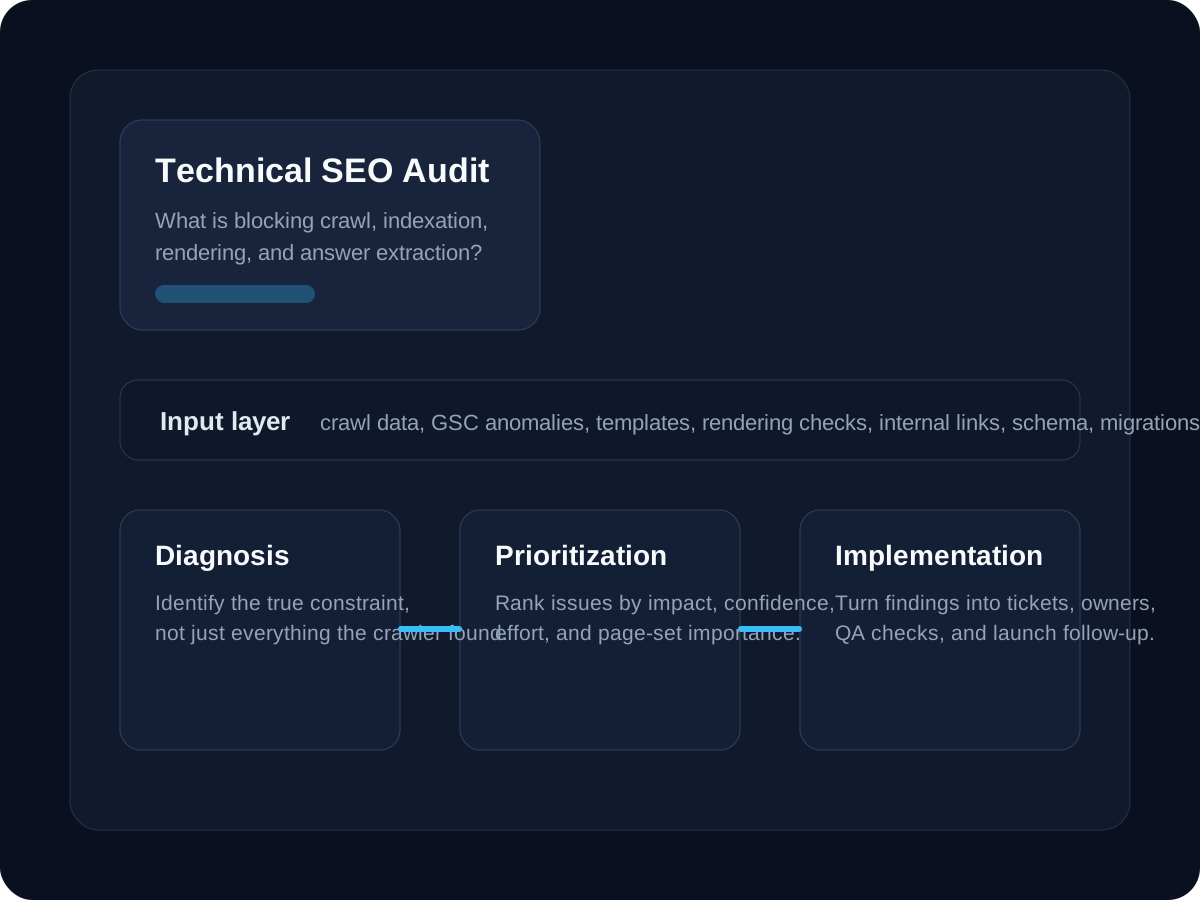
A crawler can tell you what exists. A technical SEO audit service should tell you what matters, why it matters, and what to fix first. I diagnose crawlability, indexation, rendering, duplicate signals, schema, and structural issues in the context of the pages that drive traffic or pipeline, then turn the findings into a developer-ready roadmap.
Best fit
Unexplained visibility loss, unstable Search Console patterns, template-level issues, international conflicts, or pre-migration technical debt.
What is included
Crawl, indexation, rendering, canonical, redirect, internal-link, schema, and template diagnosis across the templates that carry your traffic and pipeline.
What you receive
A prioritized roadmap, affected URL groups, developer-ready recommendations, and QA steps for retesting after release.
Useful before a redesign, after a traffic drop, when Search Console behavior stops making sense, or when your team has too many technical findings and no defensible priority order. If migration risk is part of the picture, see my SEO migration service.
Choose the right starting point
Technical SEO work is not one service shape
The right start depends on whether you need ongoing senior direction, a defined diagnosis, or release control. Choosing the wrong shape usually creates a longer scope and a weaker outcome.
| Choose this when | What it is for | What you receive | Next step |
|---|---|---|---|
Technical SEO consulting | The issue is broad, recurring, or connected to strategy, templates, content, and engineering decisions. | Senior direction, a ranked roadmap, and support while the team turns the work into releases. | Explore technical SEO consulting |
Technical SEO audit service You are here | You need a defined diagnosis before deciding on ongoing work, a redesign, or a large implementation queue. | Evidence, affected page groups, prioritized recommendations, and QA steps your team can act on. | Best fit for this page |
SEO migration service | A redesign, replatform, domain move, or structural release could put existing visibility at risk. | Baseline control, URL and redirect decisions, staging QA, launch validation, and recovery triage. | Explore migration support |
Technical SEO audit service is the right place to start when this page matches the problem in front of you. I will say so if another route would make more sense.
When to bring in a technical SEO audit service
The right time is usually before the next technical change compounds the current problem. Most teams wait until rankings are already unstable, but the real advantage comes from catching structural failure while there is still room to control it.
Flat or falling performance with no clear cause
Search Console shows strange coverage behavior, impressions flatten, or important pages disappear in and out of the index without a clean explanation.
Too many findings and no credible order
Your team has crawler exports, Search Console warnings, and platform limitations, but nobody can say which five issues are worth engineering time first.
A redesign, platform change, or template rollout is coming
You need to know which technical assumptions are already fragile before a migration amplifies them.
International or SaaS complexity is creating hidden conflicts
Hreflang, canonicals, internal links, faceted states, or JavaScript rendering are sending mixed signals that basic checklists miss.
What a technical SEO audit service should actually cover
Generic audits usually collapse everything into one undifferentiated issue list. That is the commodity version. I separate root-cause diagnosis from cleanup tasks so the roadmap reflects what is constraining visibility, not just what was detectable.
Non-commodity audit principle
A useful audit names the constraint, shows evidence, ranks the change, and makes implementation easier. If the deliverable stops at “there are 200 issues,” the work is still incomplete.
Crawlability and indexation
Robots directives, crawl traps, orphaned pages, sitemap mismatches, noindex conflicts, and the difference between pages that are technically present and pages Google actually trusts enough to index.
Canonicals, redirects, and duplication
Competing URLs, redirect waste, parameter sprawl, duplicate templates, pagination issues, and the canonical logic that decides which page owns the signal.
Templates, headings, and metadata
How recurring templates handle titles, H1s, H2s, low-value pages, internal-anchor structure, and commercial page clarity.
Rendering and JavaScript dependence
Whether essential copy, links, and structured elements are visible in HTML, delayed behind client-side rendering, or hidden in patterns that weaken retrieval.
Structured data and answer extraction
Schema quality, visible-to-markup alignment, and whether important answers are formatted clearly enough for AI-assisted discovery as well as classic search.
Implementation risk
What can break again during development, what needs QA gates, and which fixes depend on template or CMS control rather than one-off page edits.
How my technical SEO audit process works
The process is built to influence implementation, not to produce a report that gets read once and filed away.
1. Establish the real baseline
I start with the pages, templates, and technical signals that actually influence traffic or pipeline — crawl data, Search Console patterns, critical templates, internal links, and your revenue URLs.
2. Identify the true constraint
The job is not to repeat every warning. It is to work out whether the real bottleneck is crawl access, low-value duplication, rendering dependence, weak page support, bad canonical logic, or a migration-era regression that is still unresolved.
3. Rank the work
Every recommendation is scored by impact, confidence, effort, and affected scope. That keeps technical SEO tied to business reality instead of producing another spreadsheet that nobody can defend in prioritization meetings.
4. Translate it for implementation
Deliverables are written for the people shipping the work. That means affected URLs, example patterns, why the issue matters, what to change, how to QA it, and what to monitor after release.
What you receive after the audit
The output is designed for execution. That means a clear issue hierarchy, pattern-level explanation, affected scope, and concrete next steps for the people who will ship the fixes.
Typical deliverables
- A prioritized audit summary with the issues worth fixing first
- Affected URL groups and template-level patterns
- Developer-ready recommendations instead of generic issue labels
- Implementation notes for canonicals, redirects, rendering, internal links, schema, and indexation
- A QA checklist for retesting high-risk changes
- Optional follow-up support while the fixes are being shipped
Good fit for this service
- You need an audit that ranks what matters instead of repeating every crawler warning.
- You need senior technical judgment before a redesign, replatform, or template rollout.
- You need an outside read on indexation, rendering, or duplicate-signal problems that keep resurfacing.
- You want audit output that can move directly into implementation with developers or content owners.
If what you need is broader technical SEO services across implementation, templates, and cross-functional planning, the main service page explains that wider engagement model.
Proof from recent audit and roadmap work
The value is not in saying “I can audit a site.” It is in showing the kind of judgment the audit produces once the work gets specific.
BePerfectSystems technical SEO audit sample
A work sample focused on technical issues, keyword decline, content quality signals, and recovery planning rather than a generic crawl export.
View the audit sampleGetResponse competitive audit and migration planning
A sample showing how technical prioritization, competitor gaps, and migration logic can sit in the same roadmap when the site is changing structurally.
View GetResponse work sampleTrengo SaaS and international SEO planning
Useful if your technical problems sit inside a multilingual SaaS environment rather than a simple brochure site.
View Trengo work sampleSupporting guides for technical diagnosis
These articles target the informational queries that usually appear before or alongside audit-service demand. They also make the diagnosis framework visible before a project starts.
Technical SEO audit checklist for prioritization
An editorial version of the same principle behind this service: define the page set, diagnose the real constraint, and rank the work before remediation starts.
Read the checklist guideCrawled - currently not indexed diagnosis
Useful when the audit needs to explain why Google fetches pages but still refuses to retain them in the index.
Read the indexation guideDiscovered - currently not indexed diagnosis
Useful when weak internal support, crawl prioritization, or thin-value signals are part of the broader technical picture.
Read the crawl-priority guideWebsite migration SEO checklist
Useful when the audit needs to support an upcoming redesign, replatform, or post-launch recovery sequence.
Read the migration guideBefore you commit
What a technical SEO audit service should make clear before the work starts
An audit is worth buying only if the scope, decision logic, and output are clear enough to judge up front. Otherwise you usually end up paying for detection instead of diagnosis.
What the engagement includes
Baseline review, crawl and template diagnosis, Search Console pattern analysis, issue validation, and a ranked view of the technical work that actually deserves attention.
How I prioritize
I start with your money pages, then rank issues by impact, confidence, effort, and how widely the pattern spreads across the site.
What deliverables look like
An audit summary, affected URL groups, developer-ready recommendations, and QA notes that help the team ship fixes instead of just discussing them.
What outcomes matter
Clearer diagnosis, better use of engineering time, stronger indexation and rendering hygiene, and faster movement from audit to implementation.
What not to expect
A raw crawler export sold as strategy, a spreadsheet full of equally weighted tasks, or a promise that every technical issue is worth fixing now.
How to hire an SEO consultant
Useful if you are still deciding how to evaluate an audit consultant before you commit to a project or longer advisory scope.
Read guideSEO consultant pricing guide
Useful if you need to compare one-off audit pricing against broader consulting or retainer scopes without buying the wrong shape of engagement.
Read guide
Written and delivered by Umair Salahuddin
Independent SEO, AEO & GEO consultant with hands-on ownership of organic growth for SaaS, eCommerce, and multilingual sites — and builder of QueryArc, an AI-visibility measurement methodology. No outsourcing, no junior handoffs: the person you talk to is the person who does the work. More about me · LinkedIn
FAQs about technical SEO audit services
What is included in a technical SEO audit service?
My technical SEO audit service covers crawlability, indexation, rendering, canonicals, redirects, internal linking, metadata and heading structure, structured data, XML sitemaps, template consistency, and the way those issues affect the pages that matter commercially.
How is this different from a crawler export or automated audit tool?
Crawler tools are useful for detection, but they do not decide what matters first. This service turns the raw issue list into a ranked implementation roadmap tied to impact, confidence, effort, and affected page sets.
When should a company hire a technical SEO audit consultant?
The best timing is before a redesign, after an unexplained visibility drop, when Search Console behavior looks unstable, when international templates conflict, or when a team has too many technical findings and no clear priority order.
Do you stay involved after the audit?
Yes. I can stay involved for implementation planning, developer briefing, QA review, retesting, and issue reprioritization once fixes begin shipping.
Is this only for large enterprise sites?
No. The service fits any site where technical failures can suppress revenue or qualified pipeline, but it is especially valuable when the site has scale, multiple templates, international sections, or recent structural changes.
Can this feed into migration or international SEO work?
Yes. Technical audits often surface the same issues that make migrations and multilingual rollouts fragile, so the findings can feed directly into SEO migration planning and international SEO remediation.
Need a technical SEO audit that ends in clear action?
I can review the site, rank the findings, and stay involved while the fixes ship. If the audit is part of a launch or restructure, I can also support the migration path instead of treating the audit and the rollout as separate problems.