Independent SEO migration consultant
SEO migration service for redesigns, replatforms, and domain changes
Most migration losses are not mysterious. They come from redirects planned too late, staging sites that were never validated as crawl systems, and launch teams that treat SEO checks as cleanup instead of release control. I help teams protect rankings, indexation, and commercial page value before, during, and after a migration.
Best fit
Redesigns, replatforms, domain changes, IA shifts, consolidations, and multilingual restructures that can break URL ownership.
What is included
Baseline measurement, URL mapping, staging QA, redirect validation, canonical and hreflang checks, sitemap updates, and post-launch monitoring.
What you receive
A release-control checklist, validated high-value page sets, and a recovery queue for the issues that appear after launch.
This service fits redesigns, CMS changes, domain moves, site consolidations, and multilingual restructures. If the migration risk starts with unresolved technical debt, begin with the technical SEO audit service.
Choose the right starting point
Technical SEO work is not one service shape
The right start depends on whether you need ongoing senior direction, a defined diagnosis, or release control. Choosing the wrong shape usually creates a longer scope and a weaker outcome.
| Choose this when | What it is for | What you receive | Next step |
|---|---|---|---|
Technical SEO consulting | The issue is broad, recurring, or connected to strategy, templates, content, and engineering decisions. | Senior direction, a ranked roadmap, and support while the team turns the work into releases. | Explore technical SEO consulting |
Technical SEO audit service | You need a defined diagnosis before deciding on ongoing work, a redesign, or a large implementation queue. | Evidence, affected page groups, prioritized recommendations, and QA steps your team can act on. | Explore the audit service |
SEO migration service You are here | A redesign, replatform, domain move, or structural release could put existing visibility at risk. | Baseline control, URL and redirect decisions, staging QA, launch validation, and recovery triage. | Best fit for this page |
SEO migration service is the right place to start when this page matches the problem in front of you. I will say so if another route would make more sense.
Where an SEO migration service fits
The service exists for changes that can rearrange URL equity, indexation, and page ownership in one release. That can be a platform move, but it can also be a redesign, taxonomy change, domain shift, or international restructuring.
Common migration scenarios
- CMS or platform migrations
- Site redesigns with structural changes
- Domain changes or brand migrations
- Subdomain-to-subfolder consolidation
- International rollouts or multilingual restructures
- Template or taxonomy changes that affect many URLs at once
Why migrations lose traffic when the planning stays generic
The SERP leaders for migration keywords are mostly checklist pages. Those are useful, but they do not replace execution control. The failure usually happens in the gap between the checklist and the release.
Redirects are planned too late
Teams wait until launch week to map old URLs to new ones, which guarantees missed paths, chains, generic redirects, and recoverable losses that still cost traffic.
Staging looks fine but search is blocked
Noindex, robots, rendering, or internal-link problems stay hidden because nobody validates the site as a crawl and index system before release.
Canonicals, hreflang, and sitemaps diverge
Migration tickets get split across teams, and the result is technically inconsistent even though each team shipped its part.
Nobody owns post-launch triage
The release finishes, traffic drops, and there is no agreed decision path for checking redirects, indexation, templates, rankings, and server behavior in the first critical days.
What my SEO migration service includes
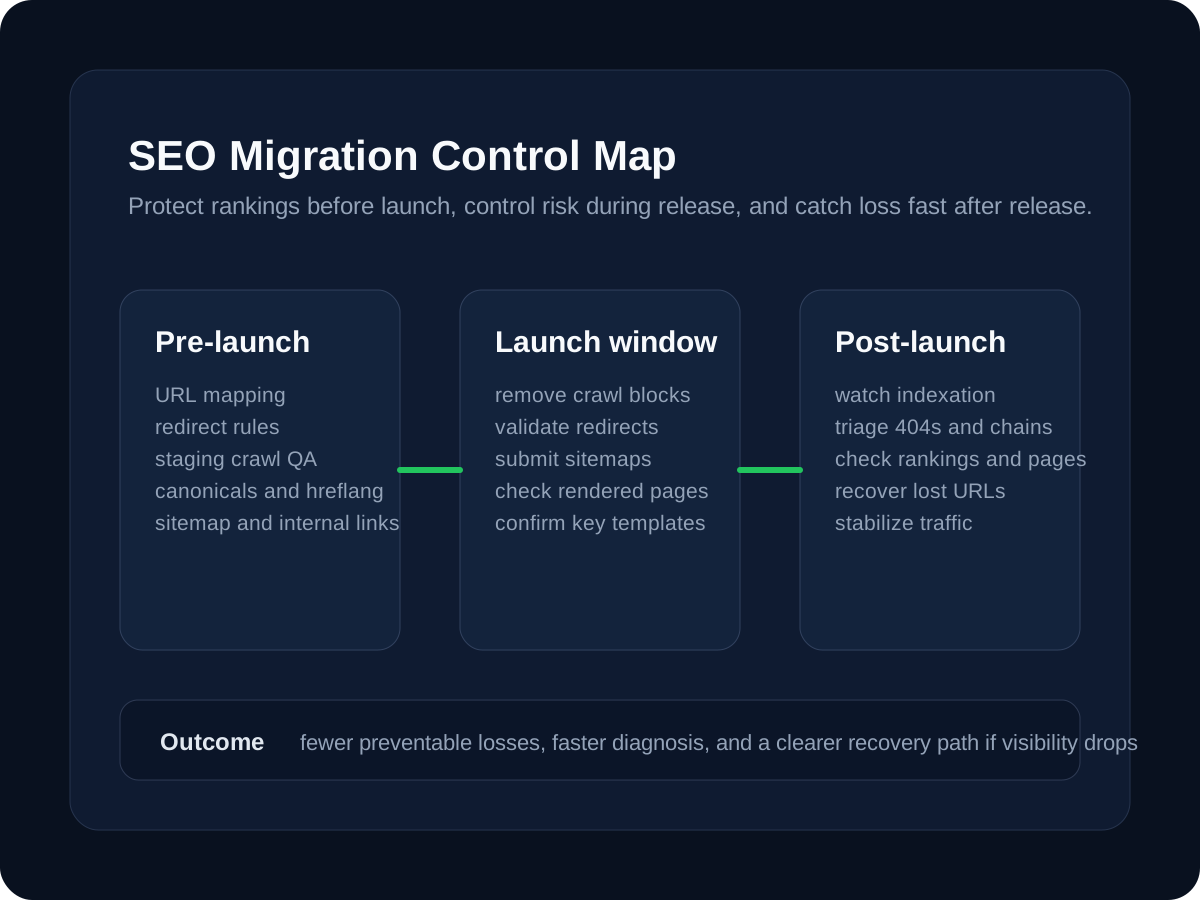
I structure the work around the release itself: what needs to be controlled before launch, what needs immediate validation during launch, and what must be monitored after the site goes live.
Pre-launch control
- Old-to-new URL mapping with clear decisions on keep, redirect, consolidate, or retire
- Redirect rules that preserve the closest intent match instead of sending everything to a category or homepage
- Staging crawls to validate crawlability, canonicals, internal links, metadata, structured data, and template output
- Baseline measurements for rankings, indexed pages, clicks, impressions, and priority templates
Launch-window validation
- Redirect testing on high-value page sets and known legacy patterns
- Removal of noindex and crawl blocks that were useful in staging but dangerous in production
- Checks on sitemaps, canonicals, robots directives, structured data, and rendered HTML
- Fast confirmation that priority pages resolve correctly for users and search engines
Post-launch monitoring and recovery
- Coverage and indexation checks for priority sections
- 404, chain, loop, and wrong-canonical triage before losses compound
- Rankings, clicks, impressions, and template-level performance monitoring
- A recovery queue that distinguishes true migration damage from normal volatility
What success looks like after launch
A good migration does not mean zero volatility. It means the preventable problems were controlled, the live site is measurable, and the team can identify real issues quickly when variance appears.
Expected outcomes
- Fewer preventable ranking and traffic losses at launch
- A clearer ownership model across SEO, product, engineering, and content teams
- Faster diagnosis when volatility happens anyway
- Less wasted recovery work after release because the baseline and decision path were documented in advance
Especially useful when the migration also affects
- Language or country versions that need hreflang, canonical, and redirect consistency
- Large content or template sets where one technical mistake can repeat across many URLs
- Commercial landing pages that need stable discoverability during brand or platform change
If international complexity is part of the rollout, pair this with international SEO consulting so the migration logic and multilingual logic stay aligned.
Proof from migration and technical planning work
The point is not to say “migrations need SEO.” It is to show the kind of planning and prioritization that reduces the chance of avoidable losses.
GetResponse migration planning sample
A work sample covering competitor gaps, technical prioritization, and an international migration framework — useful if the migration touches both SEO health and market structure.
View GetResponse work sampleInternational SEO support for multilingual growth
If the migration affects language or country versions, my international SEO work explains how hreflang, localization, and structural choices need to move together.
View international SEO serviceTechnical SEO service for pre-launch diagnosis
Migration work is stronger when the technical baseline is already clear. Audit-led diagnosis helps catch fragile assumptions before the release window gets tighter.
View technical SEO audit serviceSupporting guides for migration planning
These guides cover the adjacent informational queries that usually show up before a migration project is fully scoped, while reinforcing the same launch-control model used in the service.
Website migration SEO checklist
A practical migration checklist built around sequencing, launch control, and recovery rather than a generic export of tasks.
Read the migration checklistInternational SEO frameworks for multilingual sites
Useful when the migration changes language or country structures and hreflang decisions need to sit inside a coherent operating model.
Read the international guideTechnical SEO audit checklist for prioritization
Useful when a migration project starts with unresolved technical debt and the first job is to rank what actually matters before launch.
Read the audit guideCrawled - currently not indexed after launch
Useful when migrated pages are accessible but not retained because ownership, value, or signal consistency broke during release.
Read the indexation guideDiscovered - currently not indexed after launch
Useful when new URLs are live but weakly linked, under-supported, or part of a noisy launch footprint.
Read the crawl-priority guideBefore you commit
How to judge migration SEO support before a launch window gets tight
Migration SEO is easy to underscope because the real risk sits in timing, ownership, and QA rather than in a simple list of tasks. This is the frame I would use before buying the work.
What the engagement includes
Baseline measurement, URL mapping, redirect logic, staging QA, launch-window validation, and post-launch monitoring for the sections that carry the most search downside.
How I prioritize
I start with the highest-risk page sets, the biggest equity transfers, and the issues most likely to create preventable loss if they survive into production.
What deliverables look like
Mapping logic, QA checkpoints, implementation notes, launch-day validation steps, and a recovery queue the team can use if volatility appears after release.
What outcomes matter
Lower launch risk, faster triage, clearer ownership across teams, and better protection for the URLs and templates that carry rankings, traffic, or revenue.
What not to expect
A guarantee of zero volatility, migration SEO bolted on during launch week, or generic redirect rules that ignore page intent and URL ownership.
How to hire an SEO consultant
Useful if you are comparing migration help across consultants, agencies, or in-house ownership and need a cleaner way to judge the fit.
Read guideSEO consultant pricing guide
Useful if you need to compare one-off migration scopes against broader advisory retainers without losing sight of dependencies and release risk.
Read guide
Written and delivered by Umair Salahuddin
Independent SEO, AEO & GEO consultant with hands-on ownership of organic growth for SaaS, eCommerce, and multilingual sites — and builder of QueryArc, an AI-visibility measurement methodology. No outsourcing, no junior handoffs: the person you talk to is the person who does the work. More about me · LinkedIn
FAQs about SEO migration services
What is included in an SEO migration service?
My SEO migration service covers URL mapping, redirect logic, staging QA, crawlability and indexation checks, canonical and hreflang alignment, sitemap updates, internal-link review, launch-window validation, and post-launch monitoring.
When should SEO be involved in a migration?
Before templates are finalized and before redirect rules are written. The earlier SEO is involved, the easier it is to prevent losses instead of diagnosing them after launch.
Do you only help with domain migrations?
No. This service also fits redesigns, CMS or platform moves, information-architecture changes, subdomain or subfolder consolidation, multilingual restructuring, and large template rollouts.
Can you work with developers, product teams, and agencies?
Yes. The output is written for implementation across product, development, design, and content teams, including QA checkpoints and post-launch monitoring priorities.
Do you support international SEO migrations as well?
Yes. If the migration affects language or country versions, the work extends into hreflang, canonical, redirect, sitemap, and localization QA to stop one release from creating cross-market visibility loss.
What happens if rankings drop after launch?
The post-launch phase includes monitoring, issue triage, and recovery work so problems like broken redirects, unexpected noindex directives, or wrong canonicals are caught early instead of being left to compound.
Need SEO migration support before the release window gets tight?
I can help scope the risk, validate the staging environment, and stay close enough to the launch to catch the problems that normally surface too late.